Paint & other finishes
Working with old bikes means that often the paint is in poor condition. The following is sensible advice on what to do about it.
The options, in ascending order of cost, are:
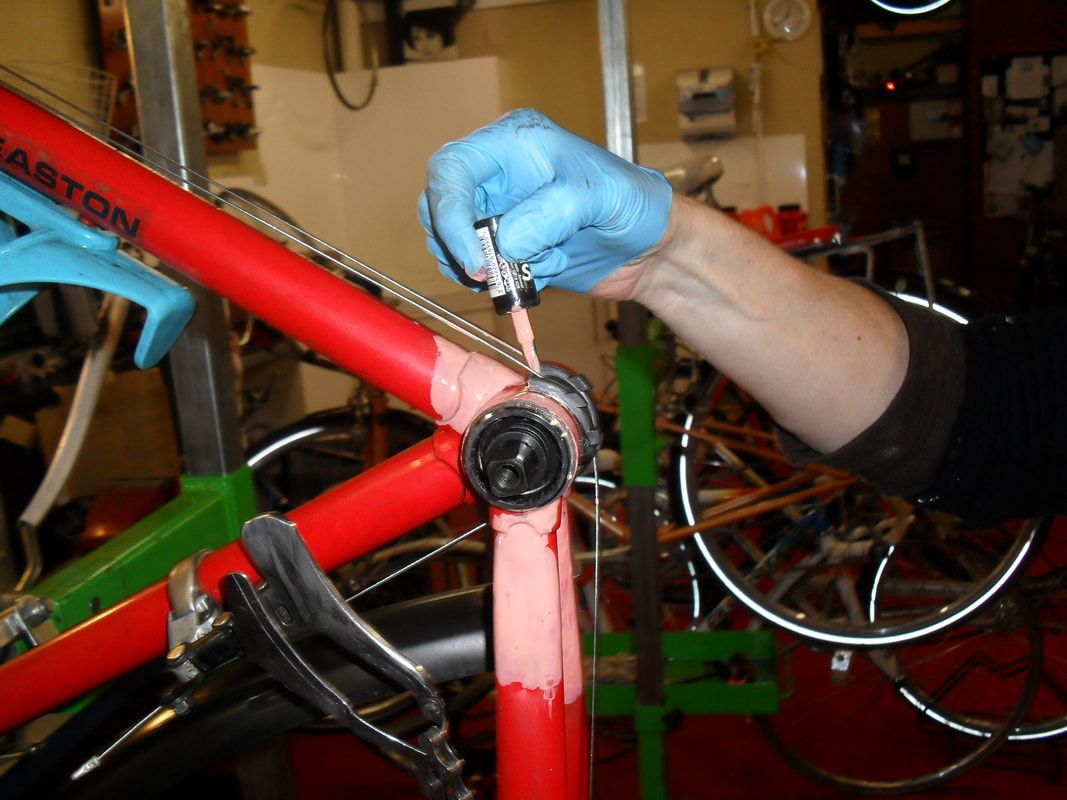
Leave it alone, but touch up the worst bits to stop it rusting. This is what we are doing in the picture above. Rust on the bottom bracket shell will only get worse, and will rust through eventually. Sanding back to the bare metal and applying paint stops this. Nail polish is good for this, as is Hammerite. Rust spots on the upper parts of the bike seldom get that bad and can be left alone, but a bit of paint is wise.
If there are many little scratches, then an all over coat of clear varnish is a good idea. We use Acrylic varnish, as it's easy to apply, and the Health and Safety instructions can be summarised as "don't drink it".
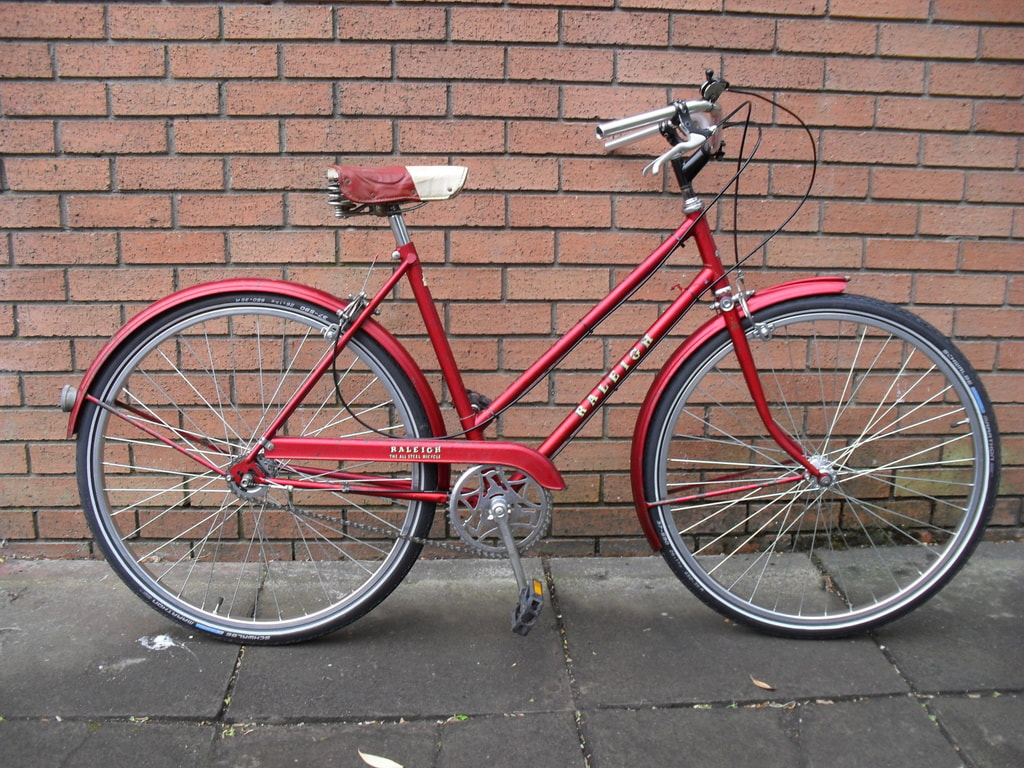
The bike below has been varnished. To do this properly you need to strip the bike down. You can leave the fork and bottom bracket in, but the rest needs to come off for access. Sometimes we go further and call it relicing.
The options, in ascending order of cost, are:
Leave it alone, but touch up the worst bits to stop it rusting. This is what we are doing in the picture above. Rust on the bottom bracket shell will only get worse, and will rust through eventually. Sanding back to the bare metal and applying paint stops this. Nail polish is good for this, as is Hammerite. Rust spots on the upper parts of the bike seldom get that bad and can be left alone, but a bit of paint is wise.
If there are many little scratches, then an all over coat of clear varnish is a good idea. We use Acrylic varnish, as it's easy to apply, and the Health and Safety instructions can be summarised as "don't drink it".
The bike below has been varnished. To do this properly you need to strip the bike down. You can leave the fork and bottom bracket in, but the rest needs to come off for access. Sometimes we go further and call it relicing.
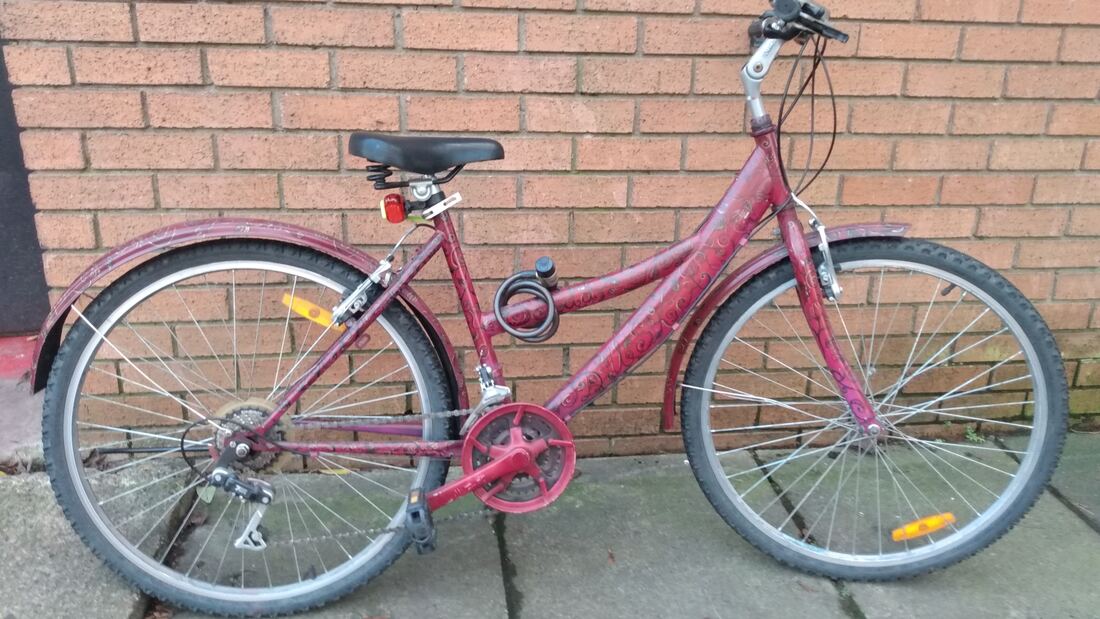
If it's really bad, like this one, then more action is needed.
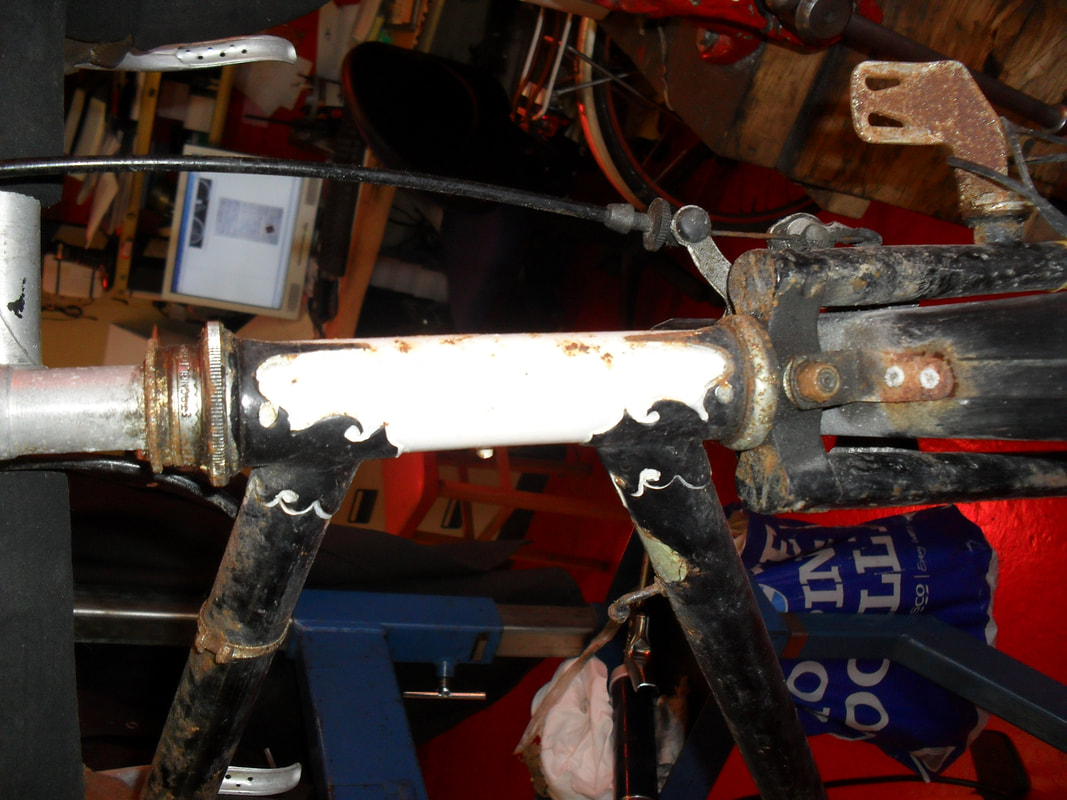
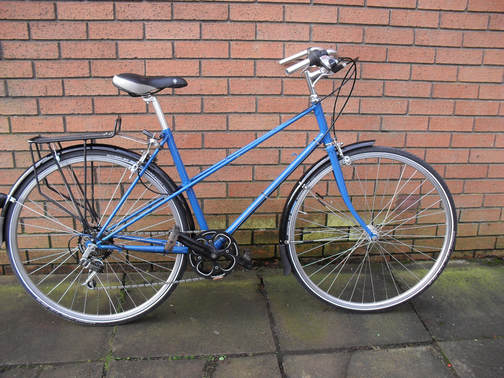
The bike above is too far gone for a coat of varnish. (It's a Hilton Wrigley, obscure bike fans.)
The cheapest way to repaint a bike is with Hammerite and a brush. It's hard to get a good finish, so we don't try, just aim for complete coverage. Experience has taught me that it's quite hard to paint every bit of a bike. There are lots of tubes and often you will think you have finished, clean the brush, and then spot a bit you have missed. To avoid this, we start with the bike upside down, clamped by the seatpost in the stand, paint it, then rotate it the right way up, paint the bits that are now easier to get at, then ask someone to check for missed bits. This method also reduces the runs and drips.
After this the bike will be protected against rust, but look pretty rough. Sometimes people like this, as it makes it less attractive to thieves.
For a better finish Japlac enamel can be used. Aerosol spray paints can produce a good finish but it's difficult, and we never do it in the workshop as we would need to write a new Health and Safety policy.
Hammerite only comes in a few colours, Japlac some more. For more choice in hues powdercoating is better. My opinions on colours are here.
Powdercoating offers the best compromise between cost, appearance and durability. In this process, the frame is first shotblasted clean, then electrostatically coated with a plastic powder and put in an oven. The plastic melts and the frame is then covered in a thin film of plastic in the desired colour. Examples of this are in the gallery below.
The cheapest way to repaint a bike is with Hammerite and a brush. It's hard to get a good finish, so we don't try, just aim for complete coverage. Experience has taught me that it's quite hard to paint every bit of a bike. There are lots of tubes and often you will think you have finished, clean the brush, and then spot a bit you have missed. To avoid this, we start with the bike upside down, clamped by the seatpost in the stand, paint it, then rotate it the right way up, paint the bits that are now easier to get at, then ask someone to check for missed bits. This method also reduces the runs and drips.
After this the bike will be protected against rust, but look pretty rough. Sometimes people like this, as it makes it less attractive to thieves.
For a better finish Japlac enamel can be used. Aerosol spray paints can produce a good finish but it's difficult, and we never do it in the workshop as we would need to write a new Health and Safety policy.
Hammerite only comes in a few colours, Japlac some more. For more choice in hues powdercoating is better. My opinions on colours are here.
Powdercoating offers the best compromise between cost, appearance and durability. In this process, the frame is first shotblasted clean, then electrostatically coated with a plastic powder and put in an oven. The plastic melts and the frame is then covered in a thin film of plastic in the desired colour. Examples of this are in the gallery below.
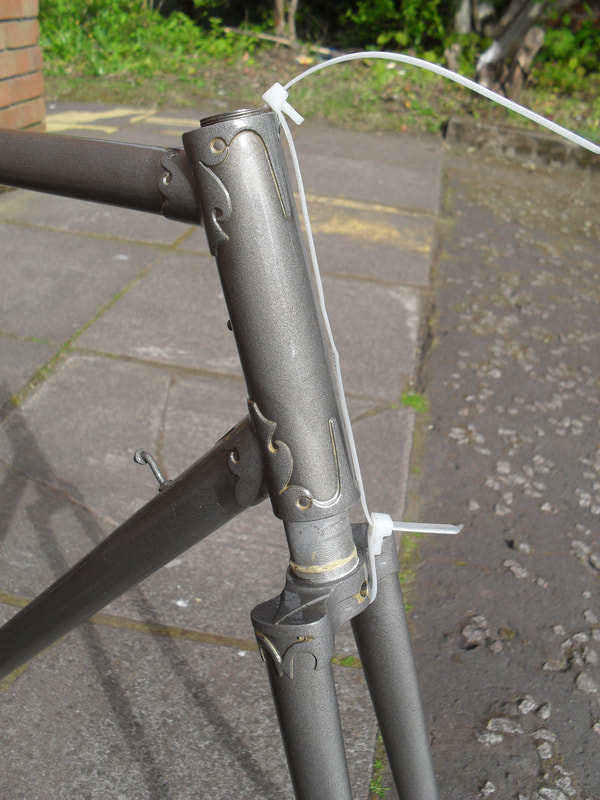
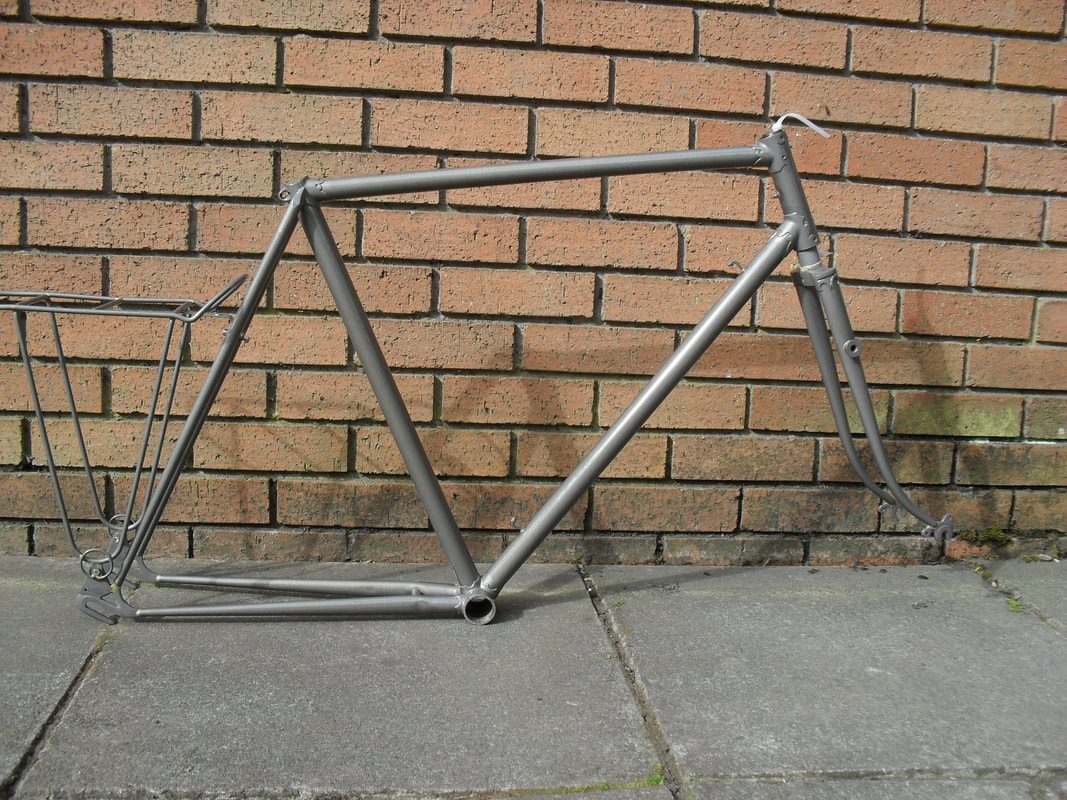
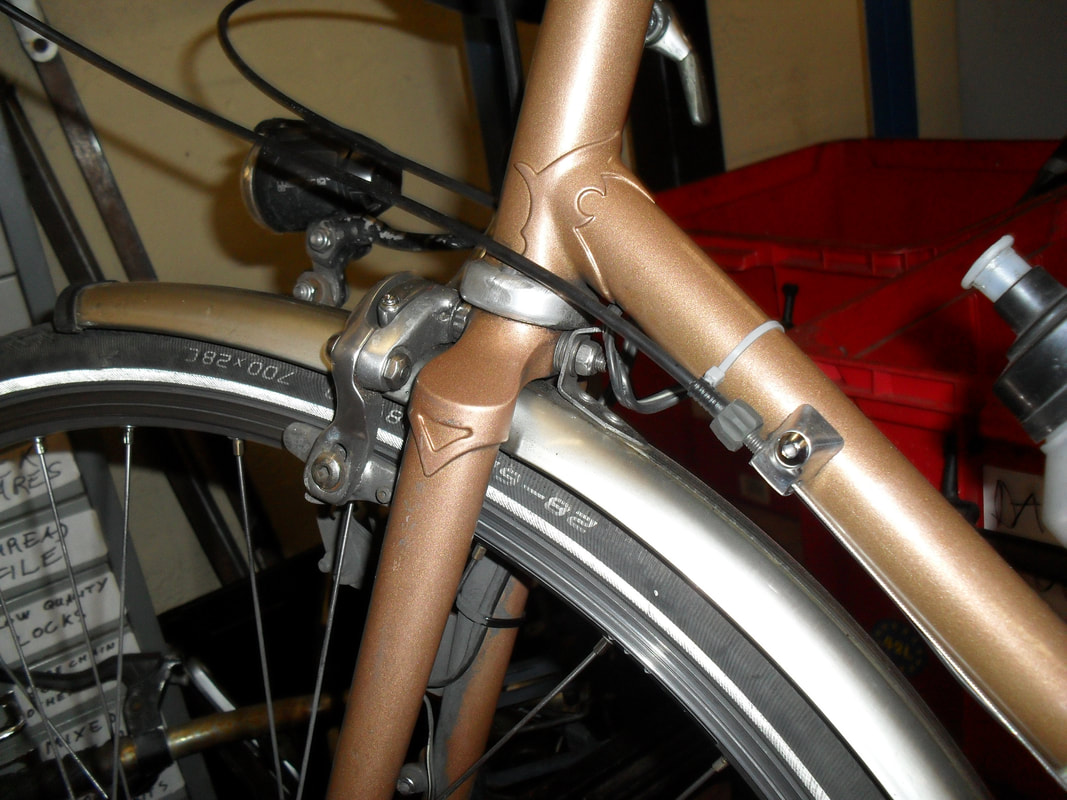
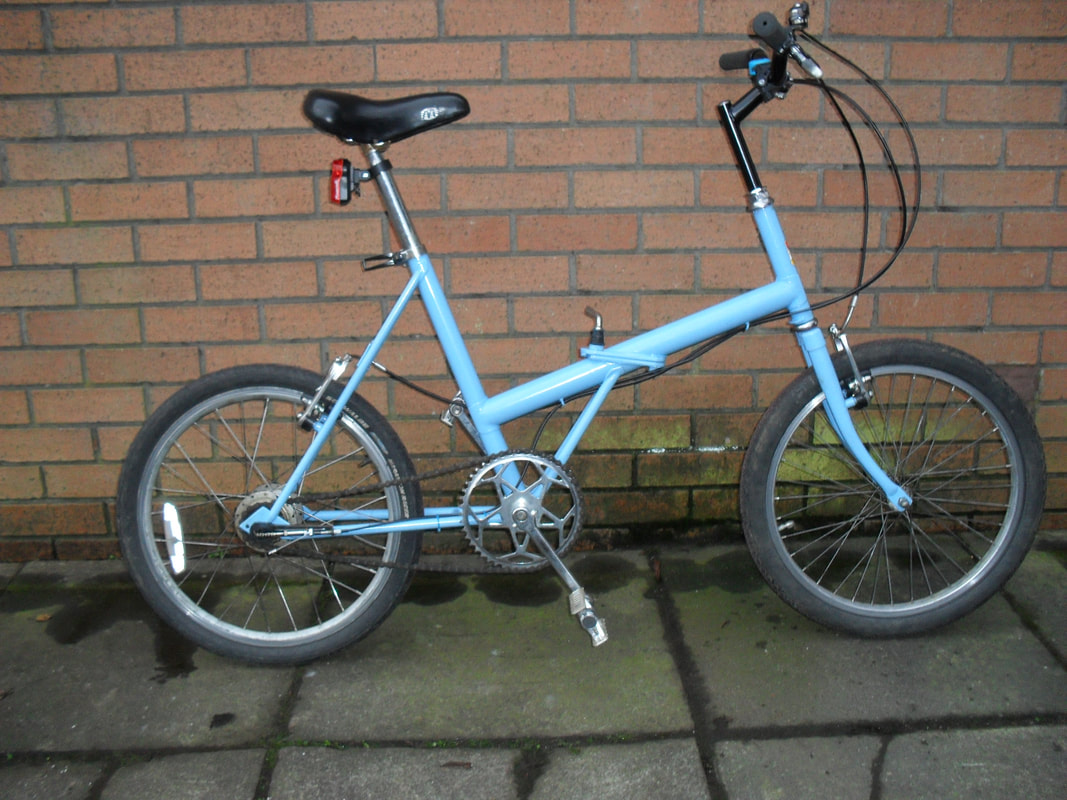

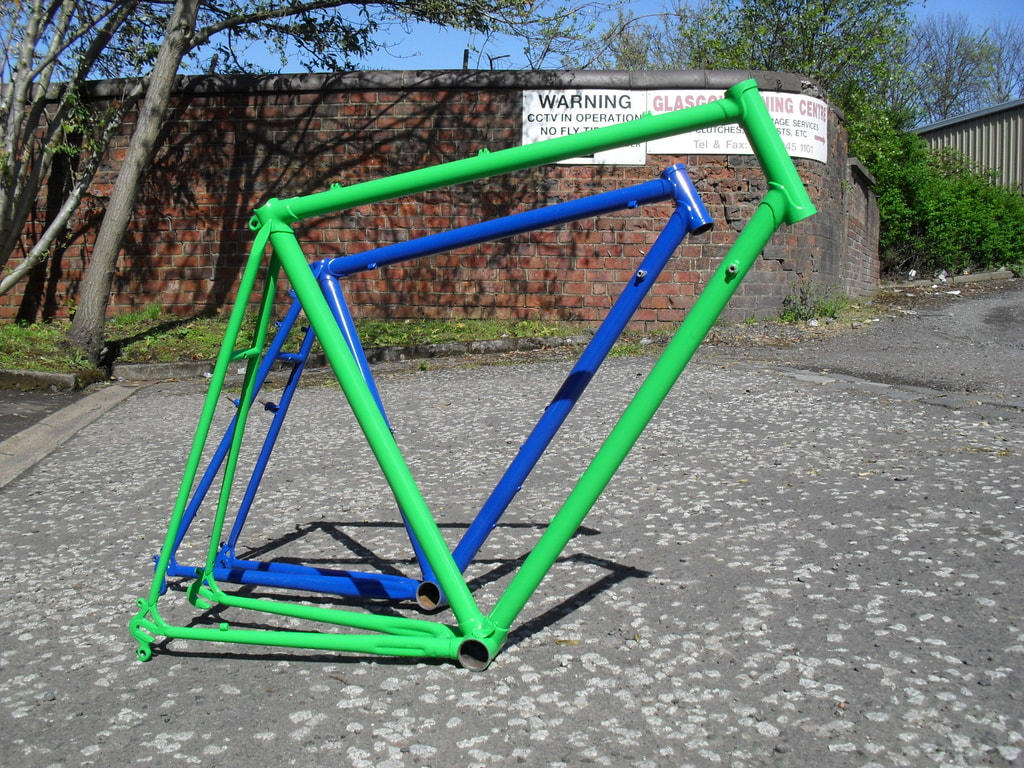
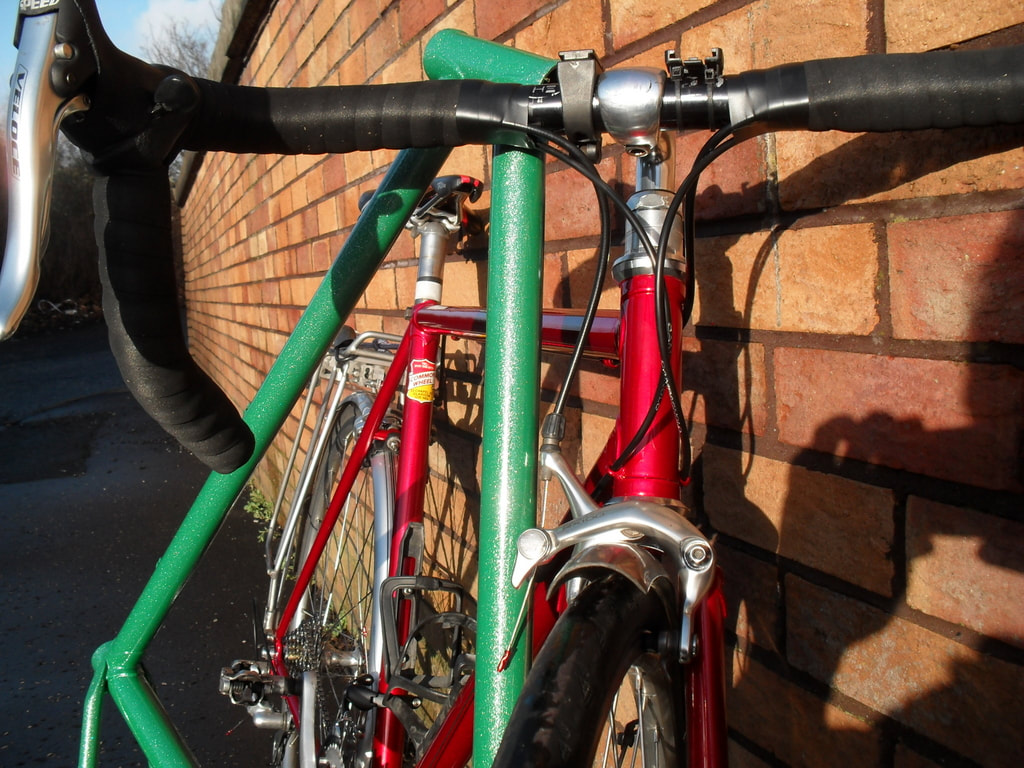
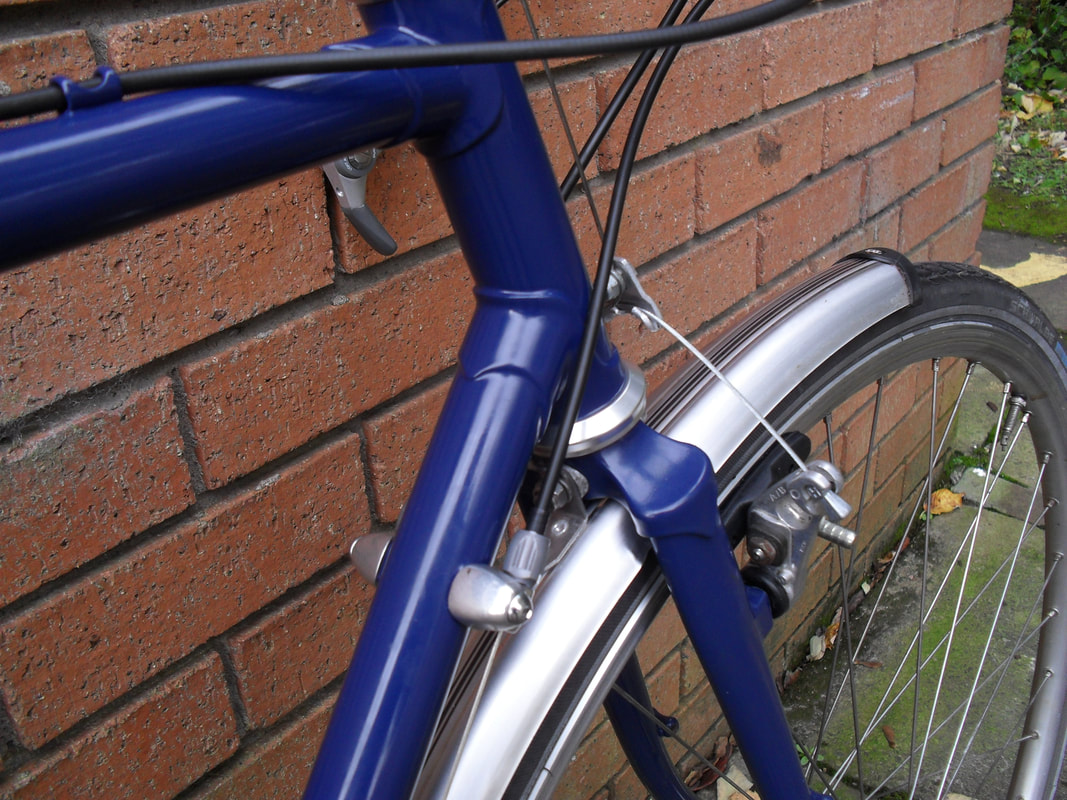
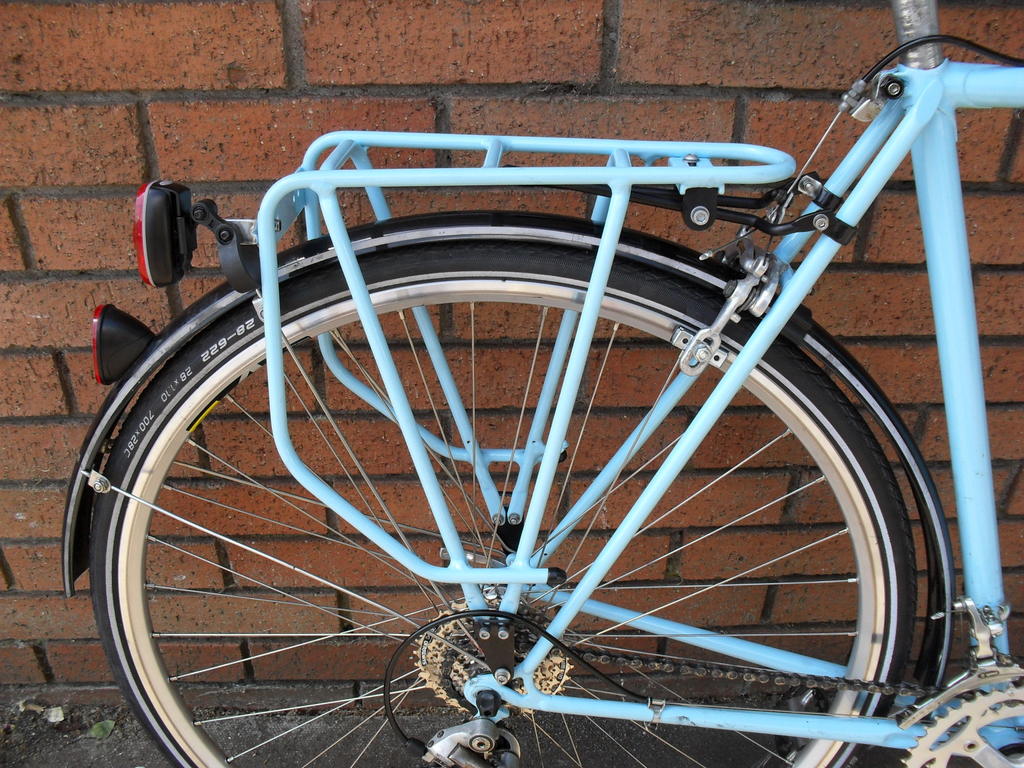

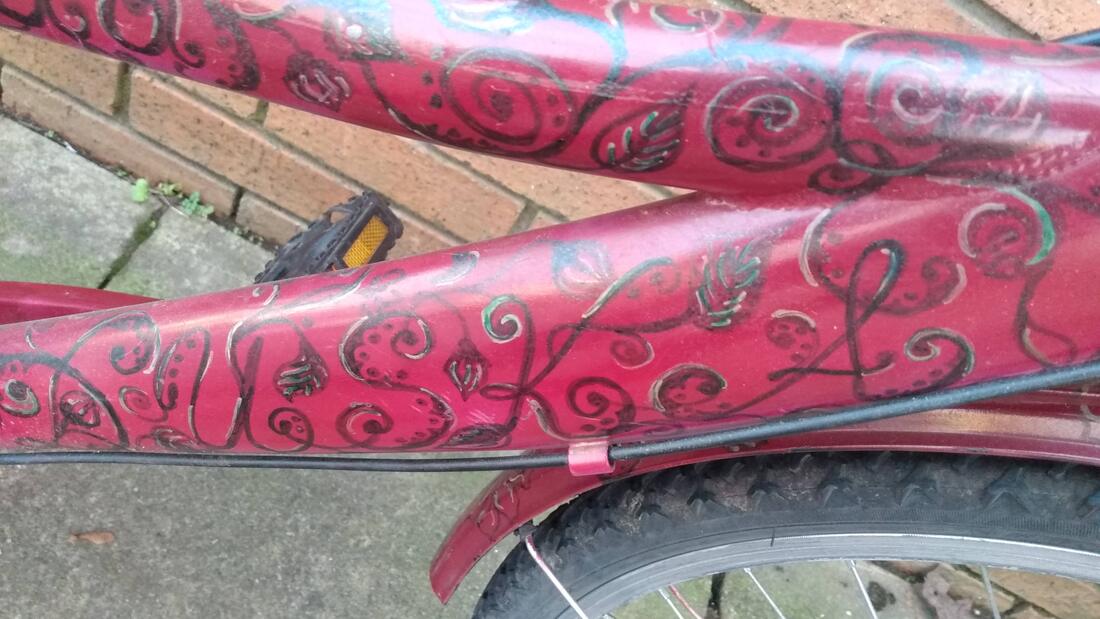
Colours are never reproduced perfectly on screens, so if you want an exact colour you have to go to the powdercoaters, choose from the colour samples and get a RAL code. If you just want blue or green then this is unnecessary.
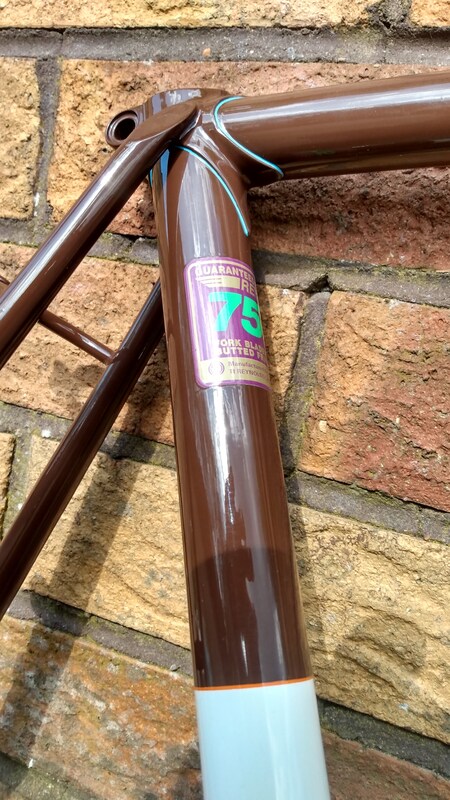
The final and most expensive way to paint a bike is to send it off to one of the specialist refinishers in England. This will cost about £300 and the bike will come back like new. The frame on the right is an example. Note the fine orange line between the brown and white. There's another example here (the first bike in the gallery). It may then be too pretty to ride.
It's also possible to cover your bike in sequins.
The final and most expensive way to paint a bike is to send it off to one of the specialist refinishers in England. This will cost about £300 and the bike will come back like new. The frame on the right is an example. Note the fine orange line between the brown and white. There's another example here (the first bike in the gallery). It may then be too pretty to ride.
It's also possible to cover your bike in sequins.
